


 Posts
Posts


Mr. Handyman has received several calls requesting more information about bed bugs from the information presented last week.
It has not become such a wide-spread problem that you should be terribly concerned. There are "pockets" of infestations at UNL and now at UNK.
If you currently do not have bed bugs do not panic. Take these precautions to help keep from getting them.
Purchase some DE (Diatomaceous Earth) and lightly sprinkle the powder along the cracks and crevices on your bedroom floor and along the piping of your mattress.
If you have a student returning from school or from travel abroad empty the contents of their suitcase (or dirty laundry bag if a student) in the garage and place the contents directly in the dryer on a high heat setting.
Let the dryer run for 1/2 hour on high setting.
If you get bed bugs the DE can be effective for a DIY treatment. Tractor Supply claims a product they sell, Tempo, is very effective as well.
If you get to a complete infestation call in the experts and seek the heat treatment.
You can also purchase bed bug insurance which covers the costs of eradicating the little buggers.
Wednesday, February 22, 2012
Got bed bugs? Don't panic


Wednesday, February 15, 2012
Don't Let the Bed Bugs Bite!
They are real, they are a nuisance, they DO BITE, and they are a bugger to get rid of.
There has been some recent news about bed bugs being a problem at the UNL campus in Lincoln. Students returning for the holidays and spring break could bring these pests into the family home if some precautions are not followed.
Most folks will revert to the professionals, an exterminator or try to DIY with some chemicals from one of the big-box stores. I have another solution that is very effective and very safe. The ONLY precaution is breathing of the dust when applying. It is Diatomaceous Earth, or DE. It can be purchased at any local health food store and is fairly inexpensive. There is no chemical smell and it is an all-natural "green" product.
Wear a dust mask and apply a ring around your bedposts, in any wall or floor cracks near your bed and dust along the decorative piping at the edges of your mattress. The DE will cut these little critters each time they crawl through the fine powder and they will eventually dry-up and die. You can put it down even with no known bed bug problem. There are no side effects or safety concerns.
If you have visitors or students returning from Lincoln I would dust all areas where they could unknowingly bring these awful critters into your home. There were huge outbreaks in the Manhattan, Chicago, Denver and Detroit areas as well as other cities recently so any traveler should be cautious.
When you travel and stay in a hotel I would take some precautions to ensure you do not pick up a hitchhiker. Inspect the bed you will lay your head down on. Keep your suitcase on the countertop or table top and vacuum it when you return. I would put out the DE just to be safe.
Wednesday, January 18, 2012
Water Trees in Winter
We’ve enjoyed a mild, warmer winter thus far in the Omaha area but it has been very dry with very little snow and rain. There is one very glaring precaution while we have been enjoying such a mild winter….your landscape. Trees and shrubs need water to survive and the climate just has not produced.
To keep your trees and shrubs healthy this winter you will need to supplement the moisture they are not getting naturally. Break out that garden hose and allow a slow stream of water to saturate the ground for several hours in and around your trees and shrubs. The ground is frozen so it will take a long time to soak in. 4-5 hours of a mild trickle to the edges of the drip line should save the trees from winter kill. Maybe try to water 2 trees a day ensuring the whole drip line is saturated.
DO NOT forget to remove the hose from the spigot each night prior to the nightly freeze.
Most of us don’t think about the fact that trees need water during the winter. They drop their leaves and go into an apparent dormant state, so we tend to forget about them. What we don’t realize is that beneath the ground there is still plenty of activity going on. The roots continue to grow throughout the winter and need adequate water to survive.
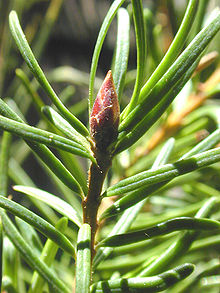 There are few outward signs of drought stress on deciduous trees during the winter. During months when they have leaves, drought is noticeable because of leaf yellowing, wilting, curling at edges, brown tips, and dropping leaves. During the winter though, there are no leaves to act as drought indicators. Evergreens on the other hand, may turn yellow, red or purple. They also may turn brown at the tips of the needles and the browning may progress through the needle towards the twig.
Trees should be watered to a depth of about twelve inches below the soil surface. The soil should be saturated within the drip line which is the area out to the outer edges of the trees branches. This will ensure that water is dispersed to all of the roots. On evergreens, water should be distributed 3 to 5 feet beyond the drip line on all sides of the tree.
Sunday, October 23, 2011
Keep the Chill Out! Shrink-Wrap your windows
I can attest that shrink-film does work! I have used it for several years on leaky, drafty windows. The extra layer of plastic adds another barrier to the harsh winter cold infiltrating into your home.
To have a great installation that will last throughout the winter season follow these simple guidelines.
2. Wipe off the trim where the tape will go with denatured alcohol or the alcohol pads that come with the kit.
3. When you cut and install the film onto the tape do not pull it tight, allow some sag. Make sure that the film does not bunch up
 at the tape lines though.
4. When using the hair dryer to shrink the film do not hold it too close. If the film shrinks too much it will pull the tape off of the trim.
Sealing up the windows for winter is a great way to make your living space more comfortable and cut down on your heating costs. That cold, harsh "Old Man Winter" will be here soon enough!
Wednesday, September 29, 2010
Don't Let the Bed Bugs Bite!
 Bed bugs. I used to laugh and joke about them as a kid but I never had any experience with them, nor had any of my family or friends knowingly had them.
They are real, they are a nuisance, they DO BITE, and they are a bugger to get rid of.
Most folks will revert to the professionals, an exterminator or try to DIY with some chemicals from one of the big-box stores. I have another solution that is very effective and very safe. The ONLY precaution is breathing of the dust when applying. It is Diatomaceous Earth, or DE. It can be purchased at any local health food store and is fairly inexpensive. There is no chemical smell and it is an all-natural "green" product.
Wear a dust mask and apply a ring around your bedposts, in any wall or floor cracks near your bed and dust along the decorative piping at the edges of your mattress. The DE will cut these little critters each time they crawl through the fine powder and they will eventually dry-up and die. You can put it down as a precautionary measure as well.
If you have visitors for the upcoming holidays I would dust all areas where they could unknowingly bring these awful critters into your home. There are huge outbreaks in the Manhattan, Chicago, Denver and Detroit areas as well as others.
If you travel and stay in a hotel I would take some precautions to ensure you do not pick up a hitchhiker. Inspect the bed you will lay your head down on. Keep your suitcase on the countertops or table tops and vacuum it when you return. I would put out the DE just to be safe.

Bed bugs are not known to carry diseases but they can leave you with some itchy welts and a lot of headaches. It is best to pre-treat with the safe DE and hopefully they never come for a visit.
Wednesday, July 7, 2010
$$$ For Clunker Appliances Nebraska Version Started July 6th.
Updating appliances will save you $$$ in operating and utility costs over many years!
Rebates expire soon (or will run out of funding) for retiring a “seasoned” appliance and replacing it with an up-to-date energy-efficient one. Nebraska will use a system that requires the consumer to fill out a mail-in form to claim the rebate on Energy Star appliances available only at verified retailers. The program had been delayed but rebates are available now, until funds run out ($1.7 Million, almost $1 million already allocated in the first day July 6th). In Iowa, the same program ran out of funds in a matter of hours so be on the ball if you want to take advantage of this program.
Nebraska will recognize the following products as eligible for rebates:
Eligible Products Rebate Amount
Central Air Conditioning $100
Heat Pumps $250
Refrigerators $100
Natural Gas & Propane Furnaces $250
Clothes washers up to $200 (depends on model)
Dishwashers $50
All products must meet strict state specifications with the exception of central air conditioners, air source heat pumps, and gas furnaces, which must meet the stricter Federal requirements.
Purchase must be made from "registered" retailers within the state of Nebraska, and after July 6th. Purchases made before the program start date do not qualify. Consumers must "self-certify" the new unit will replace a clunker unit. For more information visit the Nebraska Energy Office website. There is a limit of (2) rebates per household.
Residents are encouraged to utilize Nebraska Public Power District and the Omaha Public Power District programs to recycle clunker refrigerators.
Nebraskan’s can also receive a 5-year, 5% bank loan at a certain lenders that participate in the program.
Tuesday, February 2, 2010
A Clever Way to Spend Your Tax Return

As a primary homeowner a tax payer could receive up to a $1500 tax credit for increasing the energy efficiency of their home. If you use your tax return to purchase energy efficient doors, windows, HVAC equipment, water heaters, skylights or insulation and roofing materials you will get 30% of that money returned to you as a tax credit. If you need some of these items anyway taking advantage of this tax credit just makes financial sense.
There are certain requirements and some paperwork to keep but it is money returning to you. If you do not take advantage of it this year you will miss out. I'll put it this way. If you received a tax return of $1000 this year and expect to get about the same back next year, you could spend this years return on a $1000 home improvement (materials costs only) and next year you'll receive $1300 back instead of the $1000 because of the tax credit. You could spend up to $5000 on these home improvement projects to max out at the $1500 limit.
Not all windows, doors and HVAC purchases qualify for the tax credit. Consult a tax professional or go to energystar.gov for more detailed information. You can call Mr. Handyman for more information as well.
Tuesday, July 14, 2009
Free “Green” Money from the good uncle
 Do you like to get some “green” back at tax time? Tax credits are available for some home improvements. Don’t miss out! The program is short lived and may not be re-authorized by congress. If you need new windows, exterior doors or need to add insulation you are throwing away money if you do not take advantage of this program.
Here is a brief overview.
- Improvements must be placed in service before December 31, 2010.
- Improvements must be made to your (taxpayer’s) principal residence.
- Tax credit is equal to 30% of product cost (not installation).
- Maximum tax credit is $1,500 over 2 years (2009 and 2010). You have less than 18 months to plan, save and leverage this program.
- You must have Manufacturer Certification Statement and receipts to qualify. The Energy Star web site states "Taxpayers must keep a copy of the certification statement for their records, but do not have to submit a copy with their tax return."
Here are the Energy Efficiency Improvements that qualify through the end of 2010:
- Insulation - primary purpose must be insulation, i.e. insulated siding doesn't qualify.
- Exterior Windows, Skylights, Doors and Storm Windows and Doors - but check carefully as not all qualify (see table on Energy Star web site, right column).
- Roofing - includes all Energy Star qualified metal roofs plus reflective asphalt shingles.
- Central A/C- should be properly sized, and check for supporting documentation.
- Furnaces - there are oil, natural gas and propane eligible furnaces but make sure you're picking a model that is eligible for the tax credits. It includes some air-source heat pumps.
- Water Heaters - there are select models of natural gas, propane, oil and electric hot water heaters that qualify.
More novel Renewable Energy Improvements are eligible for 30% of the total cost (no $1500 cap), and can be added to your home up to December 2016.
- Solar Water Heating – use the sun to heat your bath water.
- Photovoltaic Systems – solar panels that produce electricity for your home.
- Residential Wind Turbines – produce energy for your home from the wind.
As always, with any government program, there are some strict rules to qualify. Visit http://www.energystar.gov/ or consult the manufacturer to ensure the requirements are met prior to purchasing any of these items.
Wednesday, July 8, 2009
"Green" Uses for Vinegar
Some people are earth friendly in almost everything they do. Some of us are just learning to be. Here is a less harmful way (environmentally) to accomplish tasks around the home without chemicals.
Soap scum on shower walls: Spray on vinegar, scrub and rinse.
Hard-water rings in the toilet: Turn off the supply valve to the toilet then flush it to lower the water level. Pour vinegar on the ring, sprinkle in borax and scrub a green scrubby.
Shower head lime/calcium deposit: Pour vinegar into a plastic bag, tape to the shower head and leave overnight. Brush the shower head to remove remaining deposits. You can remove the shower head and soak it in a tupperware bowl. You will need to apply teflon tape when re-installing it.
Drain Cleaner: Remove the stopper, pour 1 cup baking soda down the drain, then pour in 1 cup of vinegar; the mixture will foam, clean and deodorize. Use whenever needed to unclog the drain or when the drain starts to smell badly.
Mildew in the tub/shower area: Use full strength, scrub with a green scrubbie to remove mold and mildew. Evaluate the caulking and re-caulk if needed. Inspect tile grout. Repair if needed to prevent future water damage.
Fabric Softener: Fill dispenser with 1/4 cup white vinegar to soften laundry without leaving odors.
Cleaning vinyl floors: Add 1/4 cup vinegar to 1 gallon hot water for spotless floors.
Cleaning windows: Mix 50 percent white vinegar with 50 percent water in a spray bottle. Spray glass surfaces and wipe dry.
Neutralize pet odors: Mix 1 part white vinegar to 3 parts water. Pour on stained areas and blot; never rub to remove stains and odors.
Greasy dishes: Mix 2 tablespoons white vinegar to liquid dish soap to boost its cleaning power.
Coffee Pot: Add 1/2 cup vinegar to the full level for the coffee pot and run it through. Be sure to run another of just water to rinse.



